Stop wasting money on bad filament. This 3D printing filament guide reveals cheap vs expensive, how to dry wet spools, and the best beginner types.
Just so you know – some links here are affiliate links. That means if you buy something, I may earn a small coffee money at no extra cost to you. It helps keep Tonnsy.com running. Thank you for being here! ☕
Why Filament Matters
You have finally unboxed your first 3D printer. The bed is leveled. The nozzle is hot. You are ready to create something amazing.
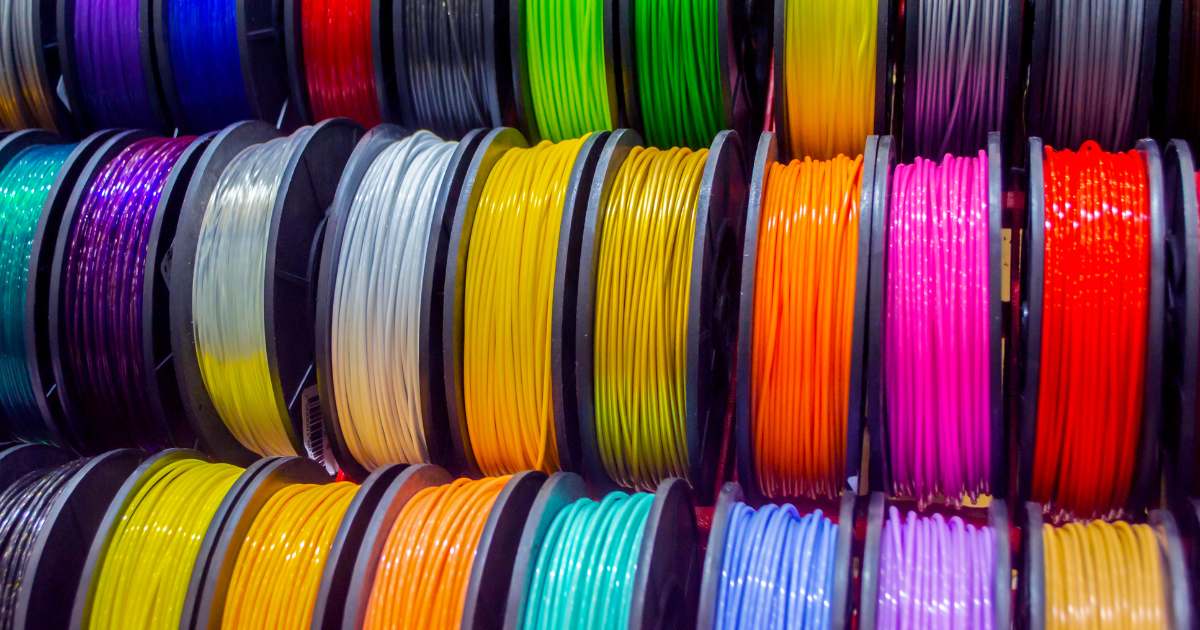
Then you open Amazon and see thousands of colorful spools. PLA. PETG. ABS. TPU. 1.75mm. 2.85mm. 1kg. 500g. Bambu filament. Creality filament. Generic filament. Your excitement turns into confusion.
This 3D printing filament guide is here to fix that.
By the end of this article, you will understand exactly what filament to buy, what size fits your printer, which brands you can trust, and why a 15spoolmightruinyourprintwhilea25 spool creates perfection.
Let’s start from the very beginning.
Filament Diameter: The 1.75mm Standard
The very first question every beginner asks: “What thickness of filament does my printer need?”
Here is the simple answer: 98% of all FDM (Fused Deposition Modeling) 3D printers on the market today use 1.75mm diameter filament.
Why 1.75mm Became the Standard
Years ago, the 3D printing industry had two competing diameters: 1.75mm and 2.85mm (sometimes called 3.00mm). Over time, 1.75mm won because:
- It requires less force to push through the nozzle
- It allows for faster printing speeds
- It melts more consistently in the hotend
- It is easier to manufacture with tight tolerances
Pros and Cons of 1.75mm Filament
| Pros | Cons |
|---|---|
| Compatible with 99% of consumer printers | Not compatible with old industrial machines (2.85mm) |
| Faster printing speeds due to easier melting | Can be harder to find in some specialty materials |
| Less pressure on extruder components | More prone to buckling in direct-drive extruders |
| Widest color and material selection | Requires tighter quality control from manufacturers |
What About Filament Variance?
On every spool, you will see two numbers printed on the label:
- Diameter: Usually 1.75mm
- Variance: Something like ±0.02mm or ±0.05mm
Variance is how much the filament thickness changes along the length of the spool. A lower variance (±0.02mm) means consistent thickness. A higher variance (±0.05mm or more) means the filament gets thinner and thicker as it feeds into your printer.
| Variance Rating | Quality Level | Best For |
|---|---|---|
| ±0.02mm | Premium | Functional parts, tolerances matter |
| ±0.03mm | Good | Everyday printing, most users |
| ±0.05mm | Acceptable | Prototypes, non-critical parts |
| ±0.10mm+ | Poor | Avoid completely |
Spool Sizes: Why 1kg Is the Sweet Spot
Not all filament spools are the same physical size. Walk into any 3D printing store or browse online, and you will find various options.
Spool Size Comparison Table
| Spool Size | Best For | Pros | Cons |
|---|---|---|---|
| 250g | Testing new colors or materials | Cheap ($5-10), low commitment | Runs out very fast (few hours of printing) |
| 500g | Small projects, portable printers | Lighter than 1kg, easier to store | Still runs out quickly |
| 1kg | Most printers, most projects | Standard size, great value ($20-30) | None for most users |
| 2kg+ | Large prints, print farms | Lower cost per gram ($15-20/kg) | May not fit your spool holder |
For 99% of beginners, buy the 1kg size.
Here is why the 1kg spool matters for your specific printer:
- Standard spool holders (like on the Creality Ender 3 or any open-frame printer) are designed for 1kg spools
- Multi-color units (like the Bambu Lab AMS or the Creality CP01) have tight compartments that only fit 1kg spools
- Filament dryers (covered later) are almost all designed for 1kg spools
Filament Brands: Do You Have to Match Your Printer?
This is one of the most common misconceptions in 3D printing.
Here is the truth: You can use any brand of filament on any brand of 3D printer.
Pros and Cons of Brand Matching
| Approach | Pros | Cons |
|---|---|---|
| Use printer brand filament | Guaranteed compatibility, optimized profiles, supports the manufacturer | More expensive ($30-40/kg), limited color selection |
| Use any trusted brand | Cheaper ($20-25/kg), huge color selection, often better quality control | May need to calibrate settings yourself |
| Use budget / no-name brands | Very cheap ($12-18/kg) | Inconsistent quality, tangles, wet filament, failed prints |
Why Do Printer Manufacturers Sell Their Own Filament?
Simple: Money and convenience.
When you buy a Bambu Lab printer, Bambu hopes you will also buy Bambu filament. When you buy a Creality printer, Creality wants you to buy Creality filament.
But 3D printing is not like inkjet printing. There is no microchip preventing third-party brands from working. The plastic itself is nearly identical across brands.
Trusted Filament Brands by Category
| Budget-Friendly (Good) | Mid-Range (Better) | Premium (Best) |
|---|---|---|
| eSun | Overture | Prusament |
| Sunlu | Hatchbox | Bambu Lab (Basic & Matte) |
| Polymaker (PolyLite) | MatterHackers Build | Fiberlogy |
| JAYO | Inland (Micro Center) | ColorFabb |
Filament Types: PLA, PETG, ABS, and Beyond
Now we reach the most important part of this 3D printing filament guide. Let me simplify this for you. Only four filament types matter for beginners.
PLA (Polylactic Acid) – The Gold Standard
| Pros | Cons |
|---|---|
| Extremely easy to print | Becomes soft in a hot car (60°C+) |
| No enclosure required | Can be brittle |
| Minimal fumes (smells like sweet corn) | Not food-safe (pores trap bacteria) |
| Hundreds of colors and effects | Low impact resistance |
Best for: Toys, decorations, prototypes
Printing temperature: 190-220°C
Bed temperature: 50-60°C
PETG (Polyethylene Terephthalate Glycol) – The Stronger Cousin
| Pros | Cons |
|---|---|
| Stronger and more flexible than PLA | Slightly harder to print (more stringing) |
| Withstands higher temperatures (80°C) | Needs a dryer in humid climates |
| Resistant to UV and moisture | Can stick too well to glass beds |
| Very durable for functional parts | Slower printing speeds recommended |
Best for: Functional parts, outdoor items, phone cases
Printing temperature: 220-250°C
Bed temperature: 70-80°C
ABS (Acrylonitrile Butadiene Styrene) – Not for Beginners
| Pros | Cons |
|---|---|
| Very strong and impact-resistant | Requires an enclosure |
| Withstands high temperatures (100°C+) | Releases unpleasant fumes |
| Can be smoothed with acetone | Prone to warping without heated chamber |
| Durable for automotive applications | Difficult to print on open printers |
Best for: Car parts, high-heat applications, durable tools
Printing temperature: 230-260°C
Bed temperature: 90-110°C
ASA (Acrylonitrile Styrene Acrylate) – Better ABS
| Pros | Cons |
|---|---|
| All the strength of ABS | Still needs an enclosure |
| UV-resistant (won’t yellow in sunlight) | Still releases fumes |
| Slightly less warping than ABS | More expensive than ABS |
| Great for outdoor parts | Requires ventilation |
Best for: Outdoor parts, car accessories, things exposed to sunlight
Printing temperature: 240-260°C
Bed temperature: 90-110°C
TPU (Thermoplastic Polyurethane) – Flexible Filament
| Pros | Cons |
|---|---|
| Rubber-like flexibility | Very hard to print on Bowden extruders |
| High durability and abrasion resistance | Requires very slow speeds (15-30mm/s) |
| Great for phone cases and tires | Absorbs moisture extremely fast |
| Layer adhesion is excellent | Stringing is very common |
Best for: Phone cases, tires, gaskets, flexible hinges
Printing temperature: 210-230°C
Bed temperature: 30-50°C (or unheated)
Exotic Filaments Summary Table
| Filament | Special Property | Hardened Nozzle Needed? | Beginner Friendly? |
|---|---|---|---|
| Carbon Fiber | Very stiff, lightweight | Yes | No |
| Glow-in-the-dark | Glows after light exposure | Yes | No |
| Wood-filled | Looks and smells like wood | Yes | No |
| Nylon | Extremely strong, flexible | Yes | No |
| Metal-filled | Heavy, can be polished | Yes | No |
My advice: Do not buy exotic filaments until you have successfully printed 5-10 spools of PLA.
How to Know What Your Printer Can Print
Your printer’s hardware determines which filament types are possible. Two main factors matter.
Enclosed vs. Open Printer Comparison
| Printer Type | Can Print Reliably | Cannot Print (Reliably) |
|---|---|---|
| Enclosed (Bambu Lab P1S, X1C, Creality K1, Qidi X-Plus) | PLA, PETG, ABS, ASA, Nylon, PC | None (with proper settings) |
| Open (Ender 3, Prusa MK4, Bambu Lab P1P, Anycubic Kobra) | PLA, PETG, TPU | ABS, ASA, Nylon, Polycarbonate |
Nozzle Type Compatibility Table
| Nozzle Material | Compatible Filaments | Not Compatible With |
|---|---|---|
| Brass (standard) | PLA, PETG, ABS, ASA, TPU | Carbon fiber, glow-in-the-dark, wood, metal |
| Hardened Steel | Everything | Nothing (best all-around) |
| Ruby / Diamond | Everything (very wear-resistant) | Nothing (but expensive) |
Cheap vs. Expensive Filament: Pros and Cons Table
Does price matter? Yes. Here is exactly what you get at each price point.
Price Comparison Table
| Feature | Cheap Filament ($12-18/kg) | Mid-Range ($20-28/kg) | Premium ($30-45/kg) |
|---|---|---|---|
| Diameter variance | ±0.05mm or worse | ±0.03mm | ±0.02mm or better |
| Tangle risk | High (common complaint) | Low | Very low |
| Moisture out of bag | Often wet | Usually dry | Guaranteed dry |
| Color consistency | Varies by batch | Consistent | Perfect batch-to-batch |
| Spool quality | Cheap plastic, may warp | Good quality | Excellent, often reusable |
| Customer support | Minimal or none | Responsive | Excellent |
| Best for | Prototypes, tests | Everyday printing | Functional parts, gifts |
My Recommendation
Do not buy the cheapest filament on Amazon. Do not buy the most expensive either.
Stick with mid-range brands in the $20-28 per kg range. You get 90% of the quality of premium filament for 70% of the price.
Filament Dryers: Do You Need One?
Let me tell you a secret that changed my printing quality forever:
Filament absorbs moisture from the air. Wet filament prints terribly.
Signs Your Filament Is Wet
- Popping or crackling sounds from the nozzle
- Stringing (thin wisps between parts)
- Rough, pitted surface texture
- Weak layer adhesion (parts break too easily)
- Steam coming from the nozzle
Filament Dryer Pros and Cons
| Pros | Cons |
|---|---|
| Saves wet filament from being trash | Costs $40-100 upfront |
| Dramatically improves print quality | Takes 4-8 hours to dry a spool |
| Essential for PETG, Nylon, TPU | Uses electricity |
| Can print directly from the dryer | Takes up desk space |
| Pays for itself after saving 2-3 spools | Another device to learn |
Do You Need a Filament Dryer?
| Your Situation | Need a Dryer? |
|---|---|
| Live in a desert / very dry climate | Probably not |
| Print only PLA and go through spools within 2 weeks | Probably not |
| Live in a humid climate (Florida, Southeast Asia, coastal areas) | Yes |
| Print PETG, Nylon, or TPU | Yes |
| Leave filament on printer for weeks at a time | Yes |
Filament Storage: Pros and Cons of Each Method
Prevention is better than cure. Good storage stops moisture absorption before it starts.
Storage Method Comparison Table
| Method | Pros | Cons | Cost |
|---|---|---|---|
| Original bag + desiccant | Free (reuse bag), simple | Bag wears out, not airtight forever | $0-5 |
| Vacuum bags with pump | Very effective, see-through | Pump requires effort, bags wear out | $20-30 for kit |
| Airtight bin + desiccant | Holds many spools, easy access | Takes space, need to recharge desiccant | $15-40 |
| Dry box with bearings | Print directly from box, professional | More expensive, requires assembly | $40-80 |
| Filament dryer (active) | Removes moisture, not just prevents | Electricity needed, one spool at a time | $40-100 |
My Storage Recommendation for Beginners
Step 1: Keep filament in the original bag with desiccant until you open it.
Step 2: Buy a vacuum bag kit ($20) and re-bag spools after use.
Step 3: If you live in a humid area, also buy a filament dryer ($40-60).
Color, Effects, and Finishes
Once you have mastered the technical side of this 3D printing filament guide, you get to the fun part: visuals.
Filament Finish Comparison Table
| Finish | Appearance | Best For | Printing Difficulty |
|---|---|---|---|
| Standard / Glossy | Shiny, smooth | General purpose | Easy |
| Matte | Flat, non-reflective | Miniatures, lithophanes | Easy |
| Silk | Metallic, shiny | Decorative objects, gifts | Moderate (slower speeds) |
| Glitter | Sparkly | Ornaments, toys | Moderate (use 0.4mm+ nozzle) |
| Glow-in-the-dark | Glows after light exposure | Night lights, keychains | Hard (needs hardened nozzle) |
| Dual-color | Color changes with angle | Vases, dragons | Moderate |
| Color-changing | Reacts to temperature | Fun prints, indicators | Easy |
Where to Buy Filament: Pros and Cons Table
Online vs. Local vs. Direct
| Source | Pros | Cons | Price Range |
|---|---|---|---|
| Amazon | Fast shipping, huge selection, reviews | Risk of counterfeit, warehouse storage issues | $15-35/kg |
| MatterHackers | Excellent quality control, US-based | Slower shipping, higher prices | $25-50/kg |
| Printed Solid | Good selection, Jessie brand is great | Less well-known | $20-40/kg |
| Local 3D printing store | See colors in person, instant advice | Limited selection, higher prices (10-20% more) | $25-50/kg |
| Direct from manufacturer | Best prices on bulk, supports the brand | Slow shipping, higher minimum order | $15-25/kg (bulk) |
Common Beginner Mistakes
Learn from my failures so you don’t repeat them.
Mistake Comparison Table
| Mistake | Why It’s Bad | How to Avoid |
|---|---|---|
| Buying 10 spools of the same untested brand | If that brand has issues, you are stuck | Buy one spool first, test it |
| Ignoring filament storage | Wet filament creates failed prints | Spend $20 on vacuum bags |
| Printing exotic filaments on brass nozzle | Glow-in-the-dark destroys brass nozzles | Buy a hardened steel nozzle ($10-15) |
| Believing “PLA is food-safe” | Layer lines trap bacteria | Use epoxy coating or silicone molds |
| Not drying PETG straight from the bag | Even “dry” PETG can be wet | Dry all PETG for 4-6 hours first |
| Printing ABS on an open printer | Warping and fumes guaranteed | Only print ABS in an enclosure |
Frequently Asked Questions (FAQS)
Can I mix different brands of the same filament type?
Yes. PLA from Brand A works with PLA from Brand B.
How long does filament last unopened?
1-2 years in cool, dry place.
How long does filament last opened?
Weeks to months depending on humidity.
Can I recycle failed prints into new filament?
Technically yes, but machines cost $500-3000.
What is the strongest filament?
Polycarbonate (PC) but hard to print. PETG/ABS are strong enough for most.
Why does my filament snap when bent?
It is wet or old. Dry it or replace it.
Can I use 2.85mm filament in a 1.75mm printer?
No. It will not fit and will break your extruder.
Do I need a heated bed for PLA?
No, but it helps with adhesion.
What is the easiest filament to print?
PLA. Hands down.
Can I print PETG on glass?
Yes, but use glue stick as a release agent or you may chip the glass.
Conclusion: Your First Filament Purchases
Let me give you a specific, actionable plan for your first 100 hours of 3D printing.
Your First Filament Shopping List
| Item | Quantity | Estimated Cost | Why You Need It |
|---|---|---|---|
| PLA (neutral color) | 1 spool | $20-25 | For prototypes and functional tests |
| PLA (fun color) | 1 spool | $20-25 | For decorative prints and gifts |
| PETG (optional) | 1 spool | $25-30 | For stronger outdoor parts |
| Vacuum bag kit | 1 set | $20 | To store filament properly |
| Filament dryer | 1 unit | $40-60 | If you live in a humid area |
Final Checklist Before Buying
- Is the diameter 1.75mm?
- Is the spool size 1kg (will it fit my printer)?
- Is the filament type PLA or PETG (not ABS or exotic)?
- Is the brand mid-range ($20-28/kg)?
- Do I have storage bags or a dryer if needed?